
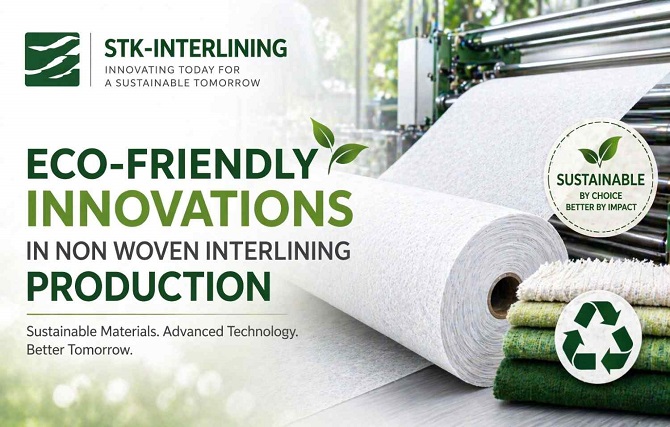
The textile industry is undergoing a primary transformation driven by the growing demand for sustainability and environmental responsibility. Among the many innovations reshaping this area, non woven interlining has emerged as a key contributor to green material production. Unlike traditional woven materials, nonwoven interlining is manufactured via bonding techniques that eliminate the need for extensive weaving and spinning, resulting in reduced energy consumption.
For in-advance-thinking organizations like STK-Interlining, sustainability isn’t only a fashion but a strategic precedence. By integrating eco-friendly enhancements into their manufacturing approaches, they will be assisting in redefining how interlining materials are produced, used, and recycled. These enhancements aren’t just fine; they lower environmental impact while enhancing overall efficiency and product performance.
The Environmental Impact of Traditional Interlining Production
Traditional interlining production frequently includes excessive water intake, energy-intensive processes, and the use of chemical remedies that may harm the environment. Conventional woven interlinings require spinning, weaving, and completing strategies that consume massive assets and generate waste.
In evaluation, non-woven interlining offers a more sustainable opportunity. Its manufacturing usually requires fewer steps, lowering each power and water usage. Studies display that non woven processes can notably lower environmental impact in comparison to traditional material manufacturing methods.
This shift within the direction of non woven technology is an essential step in addressing the environmentally worrying conditions confronted with the useful resource of the fabric business enterprise.
Use of Recycled Raw Materials
One of the most considerable eco-friendly upgrades in non woven interlining manufacturing is the use of recycled uncooked materials. Manufacturers are more and more using recycled polyester (rPET), derived from plastic bottles and material waste, to offer interlining material.
This method is not only effective in reducing dependence on virgin substances but also facilitates a decrease in plastic waste. Research shows that recycled interlining materials can lessen carbon emissions by using as much as 30–60%, depending on the production approach.
Additionally, improvements together with recycled cotton interlining further decorate sustainability. These materials are made out of discarded textiles, giving new life to waste while retaining excessive normal performance necessities.
STK-Interlining actively adopts such sustainable sourcing practices, making sure that its products align with international environmental requirements.
Development of Biodegradable and Bio-Based Fibers
Another important innovation in green interlining manufacturing is the improvement of biodegradable and bio-based fibers. Materials that encompass polylactic acid (PLA), cellulose-based fibers, bamboo, and hemp are gaining recognition due to their renewable and biodegradable nature.
These fibers actually decompose, decreasing landfill waste and environmental pollution. Unlike artificial fibers, which could take a few years to break down, biodegradable options provide a more sustainable lifecycle.
Advancements in biotechnology and material technological knowledge have made it possible to deliver bio-based fibers with overall performance traits similar to traditional materials.
By incorporating those fibers into their merchandise, manufacturers like STK-Interlining are contributing to a greener fabric environment.
Eco-Friendly Adhesive Technologies
Adhesives play a vital function in fusible non woven interlining, but conventional adhesives regularly comprise dangerous chemical materials. To deal with this trouble, manufacturers are growing eco-friendly adhesive solutions crafted from herbal or low-impact materials.
Innovations that incorporate plant-based adhesives derived from timber pulp and biodegradable bonding retailers have become an increasing number of common. These adhesives no longer reduce environmental effects but also improve the recyclability of interlining products.
STK-Interlining specializes in the use of superior adhesive technology that meets each basic performance and environmental standard, ensuring safe and sustainable manufacturing.
Energy-Efficient Manufacturing Processes
Energy performance is a key trouble of sustainable manufacturing. Modern non woven interlining manufacturing facilities are adopting electricity-saving technologies to reduce their carbon footprint.
Techniques that encompass thermal bonding with optimized warmness management, automated manufacturing systems, and smart strength control are supporting producers to minimize strength consumption. Additionally, the use of renewable electricity sources, such as solar energy, is turning into greater significant within the enterprise.
These innovations allow businesses like STK-Interlining to provide excellent interlining whilst substantially lowering environmental impact.
Water Conservation and Waste Reduction
Water conservation is another vital aspect of attention in eco-friendly textile production. Traditional material processes regularly require large amounts of water for dyeing and completing. In evaluation, non woven interlining manufacturing can notably reduce water utilization because of its simplified production device.
The advanced era, together with dry processing, closed-loop water structures, and efficient filtration techniques, is similarly improving water conservation. These structures permit producers to recycle water and reduce waste discharge.
In addition, non woven manufacturing generates an awful lot much less material waste as compared to woven techniques, as fibers are now fashioned into cloth without large cutting or trimming.
STK-Interlining integrates those practices to ensure sustainable and accountable manufacturing.
Circular Economy and Recycling Innovations
The idea of a round financial system is gaining traction in the fabric enterprise, and non woven interlining is well-relevant to assist this version. Circular manufacturing makes a speciality of reducing waste, reusing materials, and recycling merchandise at the forefront of their lifecycle.
Non woven interlining can be designed for recyclability, allowing substances to be reprocessed and reused in new products. This method is now not high-quality, reduces waste, and additionally conserves assets and lowers production prices.
Manufacturers are also exploring take-back return programs and closed-loop recycling structures to promote sustainability.
STK-Interlining is actively aligning with circular financial system ideas, contributing to a more sustainable destiny.
Smart and Sustainable Textile Innovations
Technological advancements are the development of clever and sustainable interlining solutions. Innovations, including practical coatings, lightweight systems, and multi-layered materials, are improving each overall performance and sustainability.
For example, smart interlinings can incorporate skills like temperature regulation, moisture management, and sturdiness enhancement, lowering the need for extra materials and treatments.
These improvements are now not exceptional, beautifying the product exceptionally, but additionally contribute to beneficial resource performance and environmental sustainability.
Certifications and Compliance with Global Standards
Eco-satisfactory interlining manufacturing calls for compliance with international necessities and certifications. Certifications together with OEKO-TEX, Global Recycled Standard (GRS), and Global Organic Textile Standard (GOTS) ensure that products meet strict environmental and safety requirements.
These certifications offer a guarantee to clients and stakeholders that the products are synthesized responsibly and sustainably.
STK-Interlining prioritizes compliance with those requirements, reinforcing its dedication to excellence and sustainability.
Role of STK-Interlining in Sustainable Innovation
STK-Interlining has positioned itself as a frontrunner in green interlining production with the aid of embracing innovation and sustainability. The organisation invests in superior technologies, sustainable materials, and green methods to supply exceptional products with minimal environmental impact.
By focusing on studies and development, STK-Interlining constantly explores new strategies to promote sustainability, from biodegradable substances to electricity-efficient production techniques. Its dedication to environmental duty makes it a trusted partner for groups looking for sustainable cloth solutions.
Challenges in Implementing Eco-Friendly Innovations
Despite the numerous advantages, imposing inexperienced improvements in non woven interlining manufacturing offers positive stressful situations. These consist of higher initial charges, technological boundaries, and the need for professional facts.
Additionally, retaining stability amongst sustainability and typical overall performance can be hard, as green substances ought to meet the same fine requirements as conventional alternatives.
However, ongoing studies and technological enhancements are supporting triumph over those challenges, making sustainable manufacturing more available and fee-powerful.
Future Trends in Eco-Friendly Interlining Production
The destiny of non woven interlining manufacturing is cautiously tied to sustainability and innovation. Emerging developments include the usage of advanced bio-based substances, digital production technology, and elevated automation.
Collaborations among producers, research establishments, and governments are also using the latest green solutions for improvement. As purchasers call for sustainable merchandise, the organization is expected to witness further improvements in green technologies.
Non woven interlining will play an important role in shaping the destiny of sustainable style and textile production.
Eco-pleasant innovations in non woven interlining manufacturing are reworking the fabric enterprise through way of decreasing environmental impact and promoting sustainable practices. From recycled substances and biodegradable fibers to electricity-inexperienced strategies and circular economic device models, these improvements are paving the way for a greener future.
STK-Interlining stands on the leading fringe of this modification, leveraging innovation and sustainability to deliver outstanding interlining solutions. By embracing green practices, the enterprise not only meets the needs of modern-day purchasers but also contributes to a more sustainable and accountable fabric enterprise.
Leave a Reply