
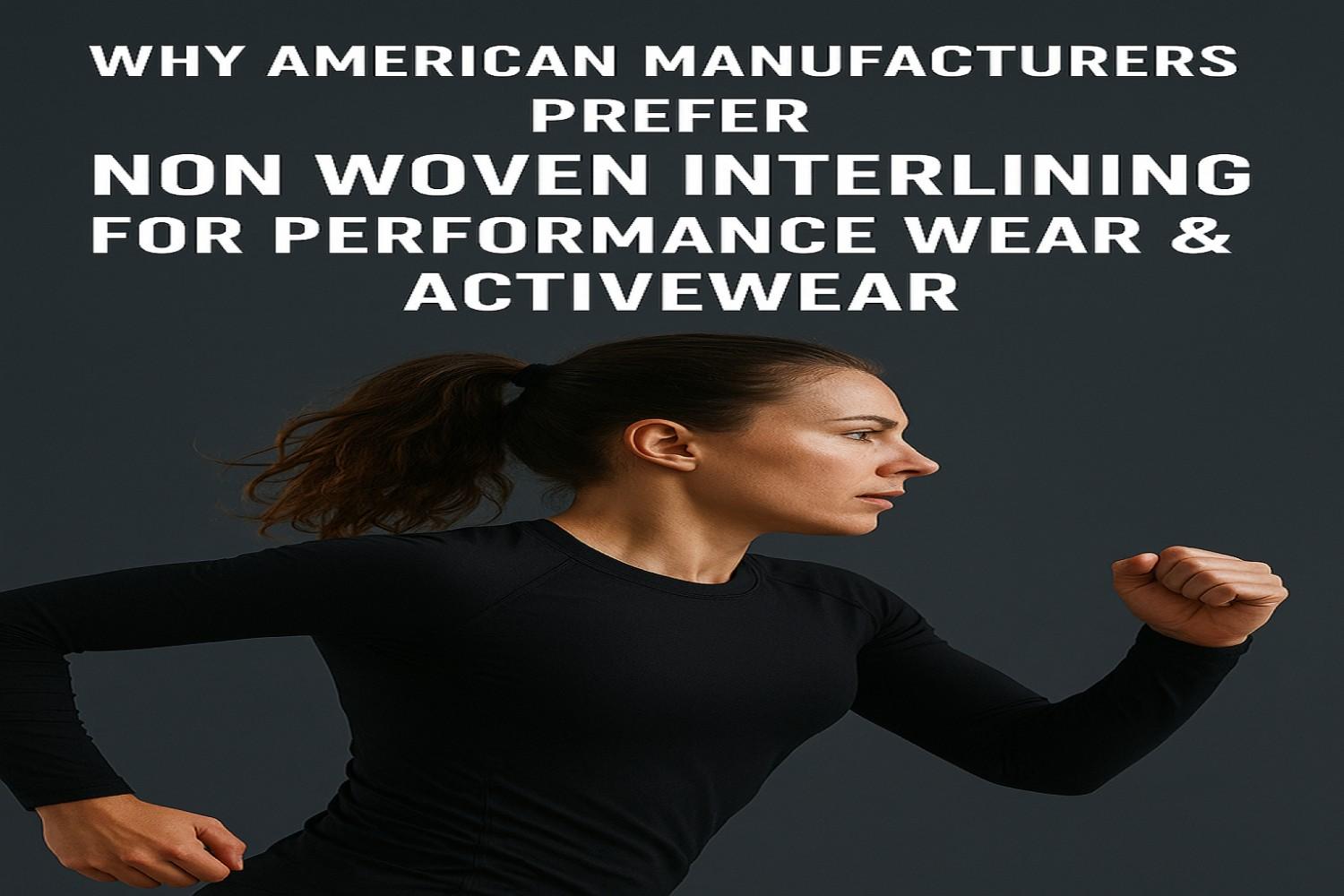
The demand for high-performance active wear in the United States has grown exponentially, driven by shifts in lifestyle, increased attention to fitness, and the booming at leisure trend. As purchasers seek garments that provide comfort, sturdiness, flexibility, moisture control, shape retention, and a light-weight feel, American apparel producers have turned to non-woven interlining as a core aspect for enhancing garment performance. Non-woven interlining is engineered using superior bonding technologies—chemical, thermal, and mechanical—to provide advanced balance, controlled stretch, light-weight shape, and long-lasting wear resistance. Unlike traditional woven or knit interlining, non-woven editions are more flexible, value-driven, and compatible with a wide range of technical fabrics used in sports wear. Whether it’s yoga pants, gym tops, soccer jerseys, leggings, overall performance jackets, outerwear, swimwear linings, or compression clothing, non-woven interlining enables American manufacturers to achieve consistent garment shape, high elasticity, incredible recovery, and sturdy fusing. This comprehensive manual explores why non-woven interlining has become the preferred choice in the U.S. Active wear market, its manufacturing process, its applications, and the benefits it brings to overall performance wear and current at leisure apparel.
Understanding Non Woven Interlining and Its Rise in U.S. Apparel Manufacturing
Non-woven interlining is produced using fibers that can be bonded together via heat, pressure, or adhesives, without the need for conventional weaving or knitting. This creates a uniform, stable shape ideal for extensive overall performance apparel that needs flexibility and durability. The upward push of active wear inside the U.S. Marketplace—driven by brands like Nike, Adidas, Under Armor, Lulu lemon, and rising personal-label producers—has expanded the use of non woven interlining because of its unique capability to enhance shape retention, help stretch fabric, and strengthen garments without adding bulk or proscribing movement.
Manufacturing Technology behind Non Woven Interlining
In overall performance wear, cloth performance is everything. Non woven interlining is crafted the use of a couple of technologies that enhance its structural and practical traits.
Spun bond Technology
Fibers are extruded and bonded through warmth.
Benefits: light-weight, breathable, uniform floor.
Needle-Punched Technology
Mechanical entanglement will increase durability.
Benefits: excessive power and dimensional stability for the overall performance gear.
Chemical-Bonded Interlining
Adhesive binders connect fibers collectively.
Benefits: soft sense and brilliant drivability.
Thermal-Bonded Interlining
Uses heat to bond fibers without the need for chemicals.
Benefits: eco-friendly, easy, and perfect for active wear.
Fusible Non Woven Interlining
Coated with resin dots or powder for bonding.
Benefits: perfect for excessive-stretch performance fabrics (polyester, spandex, nylon).
These technologies make certain that non woven interlining meets the needs of American overall performance put on manufacturers.
Why Non Woven Interlining Is Ideal for Performance Wear & Active wear
American active wear is engineered for consolation, motion, and long-lasting put on. Non woven interlining gives unrivaled benefits over woven or knit options.
Stretch Support & Recovery
Active wear fabric—regularly composed of excessive spandex, nylon, and polyester blends—requires interlinings that can stretch without breaking down. Non woven interlining:
- Adapts to frame motion
- Supports elasticity without stiffness
- Prevents cloth deformation during excessive stretching
- Enhances the performance of leggings, sports bras, and compression wear
This is a primary reason U.S. Manufacturers select non woven interlining.
Light-weight and Comfortable Feel
Consumer expectations for weightless, breathable performance clothing have reshaped the market. Non woven interlining:
- Adds structure without bulk
- Maintains garment softness
- Keeps apparel light throughout exercises
- Enhances comfort throughout going for walks, yoga, the gym, and training
Light-weight homes are essential for American at leisure brands.
Excellent Breathability & Moisture Control
Performance wear must keep the frame cool and dry.
Non woven interlining helps:
- Air stream
- Moisture-wicking
- Heat dissipation
Moisture-control is crucial in sportswear like running tops and education jackets.
High Durability for Intense Activity
American clients anticipate active wear to withstand tough exercises. Non woven interlining offers:
- High tear resistance
- Durability underneath repeated stretching
- Long-lasting overall performance
- Strong fusing power throughout production
These properties help apparel remain strong through high-impact sports.
Enhanced Shape Retention for at leisure Fashion
At leisure calls for fashionable silhouettes that maintain form. Non woven interlining:
- Prevents sagging
- Maintains frame contouring
- Improves garment appearance
- Supports collars, waistbands, cuffs, wallet, plackets
Shape retention is one of the key reasons U.S. Fashion manufacturers choose non-woven interlining.
Key Advantages Driving Its Adoption inside the USA
American producers depend upon non woven interlining due to several clear benefits:
✔ Cost-powerful vs. Woven interlining
✔ Consistent floor shape
✔ faster manufacturing cycles
✔ Easy fusing with synthetic sportswear fabrics
✔ Availability in numerous weights (GSM)
✔ Compatibility with excessive-stretch fabrics
✔ Customizable for unique garb desires
These blessings increase performance and profitability in U.S. Garb manufacturing.
How Non Woven Interlining Enhances the Performance of Active wear
Improves Strength & Stability
Ensures seams, panels, and pockets remain intact throughout heavy motion.
Enhances Thermal & Moisture Balance
Works properly with temperature-regulating and sweat-wicking fabric.
Supports High Mechanical Stress Areas
Waistbands, armholes, necklines, collars, cuffs, and sports bra bands.
Ensures Long-lasting Fusing Bond
Low-temperature fusible non woven interlining bonds without difficulty to polyester and spandex blends.
Frequently Asked Questions (FAQ)
Q1: Why is non woven interlining preferred for active wear?
Because it presents stretch compatibility, sturdiness, moisture management, and light-weight overall performance.
Q2: Is non woven interlining long lasting?
Yes—needle-punched and thermal-bonded non woven interlining provide excessive durability for sports clothing.
Q3: Is it suitable for spandex and polyester blends?
Absolutely. Fusible non woven interlining is right for synthetic, stretchy fabrics.
Q4: Does non woven interlining affect breathability?
No. In fact, it improves airflow and moisture control.
Q5: Which active wear products use non woven interlining?
Leggings, sports bras, yoga wear, jackets, pockets, waistbands, and overall performance add-ons.
Non-woven interlining has become the preferred choice for American manufacturers in the overall performance apparel and active wear industry due to its outstanding flexibility, lightweight nature, durability, breathability, and compatibility with high-performance synthetic fabrics. Whether enhancing stretch help, improving structural balance, or imparting price-powerful manufacturing benefits, non-woven interlining can provide unrivaled value. From severe workout gear to everyday at leisure, American manufacturers rely on non-woven interlining to create clothing that meets contemporary standards of comfort, style, performance, and sustainability. As health trends develop and at leisure continue to dominate U.S. Fashion, the demand for advanced, outstanding non-woven interlining will only continue to rise—solidifying its position as the backbone of premium performance apparel.
Leave a Reply